The Man in the Next Seat
Finding Our Seats
Thursday night, my husband and I drove to Indianapolis for a drum corps competition at Lucas Oil Stadium.
The crowd was already thick by the time we found our section. We always pick seats near the aisle — easier in, easier out, with a stadium that size.
When we got to our row, an older man had his notepads, pens, and event program spread across my seat like a desk.
"Looks like I'm evicting you," I said, motioning to the seat.
He laughed and gathered his things. "Guess you're taking my desk away."
We both laughed, and just like that, the ice was broken.


A Scorecard of His Own
I introduced myself and asked if he came often.
He'd been attending for over forty years, he told me, and he loved it — the competition, the pageantry, all of it. He had a notepad, and after every group performed, he scored them himself, building toward his own private ranking by the end of the night.
He talked about the young people who marched with real admiration. These kids could be doing anything else with their summer, he said. Instead, they spent every single day practicing, perfecting, chasing the chance to be the best by the time August rolled around. That kind of discipline meant something to him.
Then I asked if he had a favorite.
"The Colts," he said. A smaller corps out of Dubuque, Iowa — the kind that would likely land somewhere in the top 20, not among the powerhouses everyone expected to win.
He lived in Iowa. And like a lot of people from a certain generation, he followed his home team no matter the sport, no matter the odds. Loyalty wasn't conditional on winning.
Every question I asked, he had an answer. Corps history, scoring nuances, who used to march with who. Forty years of loyalty condensed into one soft-spoken man with a notepad on his lap.


"I Wish I Had Marched"
I never got his name. I wish I had. But somewhere in our conversation, I asked him the question that seemed obvious to ask a man so devoted to this sport.
"Did you ever march?"
He told me he had, in high school. He'd always loved music.
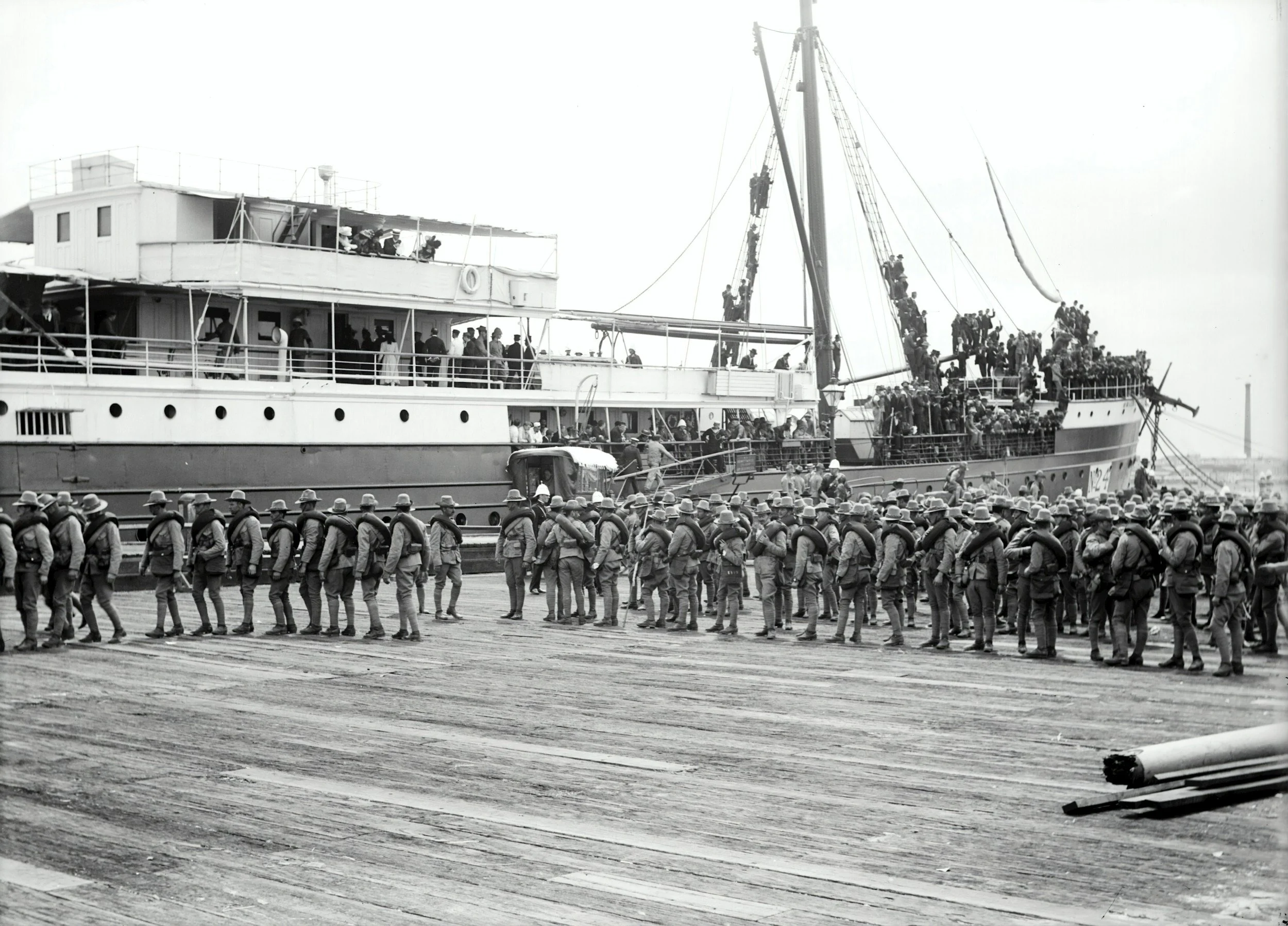
Then came the war. Korea.
By the time he came home, he'd aged out — you can't march drum corps past 21. The window had closed while he was somewhere else, doing something the world needed more urgently than his music.
You could see it in his eyes. The disappointment hadn't faded, even decades later.
He asked if we had marched. I told him no, though we knew young people who had, and had followed the activity on and off over the years ourselves.
He nodded, the way people do when an answer confirms something they already suspected.
Bones
At one point, I asked him about a memory of my own — a corps I'd seen once where a figure dressed as a phantom appeared high in the stands before the performance began, spread a long cape to the crowd, and vanished the moment the corps took the field. Silent. Sudden. Gone before you could look twice.

I couldn't remember the name.
"That's the Crossmen," he said, without missing a beat. "His name is Bones."
Of course he knew.
What I Took From Him
I keep thinking about that man in the seat next to mine.
And honestly, it makes me sad.
He wanted to be part of something competitive, something worthwhile — something bigger than himself. He'd already proven he was that kind of person, answering his country's call to Korea when he was barely more than a boy. A small-town participant who did his part in something far larger than himself, then came home to find his own small dream had quietly expired while he was gone.
He didn't get to march. And it struck me, watching him, that there may have been other ways in—volunteering, working with a corps in some capacity, staying close to the activity from the inside rather than from the stands. But he seemed like a humble man, not the type to intrude on something he felt belonged to younger hands. So instead, he found his own way to stay close to it: forty years in the stands, a notepad on his lap, scoring corps that would never know his name.
He was there alone. No one beside him but strangers he'd just met.
And, if I had to guess his age, around ninety.
I thought about what it took to get him there — the stairs he climbed, the hard metal seat he sat in for hours, the stamina to stay through most of the competition without complaint. That, on its own, is remarkable. Most people half his age wouldn't make that climb.


I marveled at it. And somewhere between the Colts and Bones and the war he never talked about with any bitterness, one thought settled into me and hasn't left since:
If he can still show up like this at ninety, what exactly are the rest of us waiting for?
As the night wound down, we told him it was a pleasure to meet him, thanked him for his service, and wished him well for the rest of the competition, which wrapped up today.
Don't let anyone — including yourself — talk you out of at least trying. Do whatever it takes to chase your dream before it's too late to chase it at all. He didn't get that chance. Most of us still do.
I think about that a lot these days, in my own small way, at my own kitchen table, with my own version of a notepad and a dream I almost let go of more than once.
Follow it. However big, however small, however long it takes.
Because somewhere out there is a man in his nineties, climbing stadium stairs alone, still showing up for the thing he loves — and if that's not permission enough, I don't know what is.
Keep writing!
Dianne
Enjoyed this post? Subscribe to the Delusion for honest stories from the query trenches—new posts every week or two, no spam, just real talk.